Zero-Turn Mowers Explained: Are They Worth the Hype?

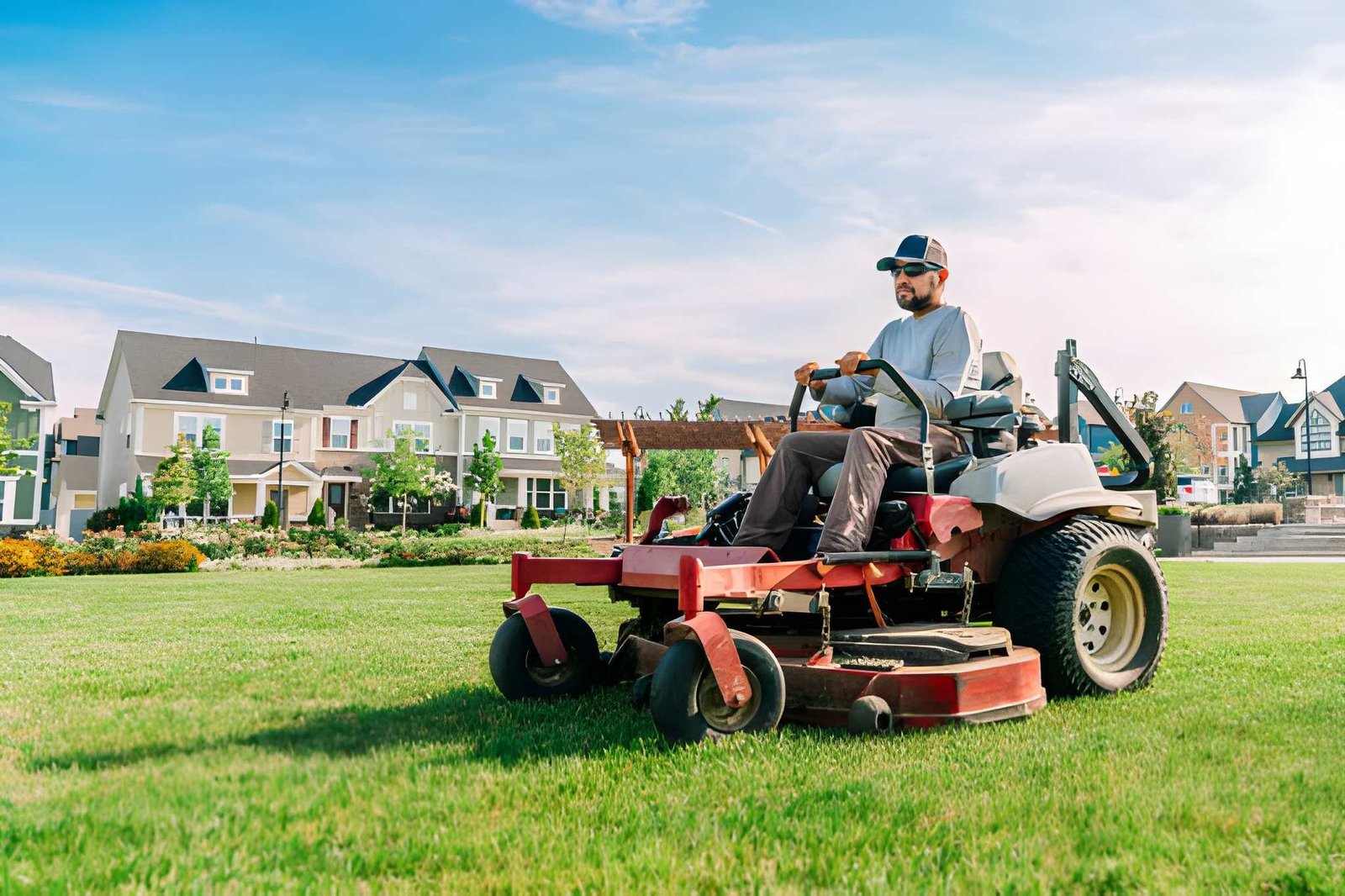
You’ve seen them at equipment dealers and maybe at your neighbor’s house. Zero-turn mowers look like something between a go-kart and a lawn tractor. They sit low to the ground, have two sticks instead of a steering wheel, and they cut grass faster than just about anything.
But are they actually worth the money? Or are they overkill for most people?
At Mower Picker, we test zero-turns from brands like John Deere, Cub Cadet, Husqvarna, Scag, and Toro. Here’s what you need to know.
What Is a Zero-Turn Mower?
A zero-turn mower has two drive wheels that operate independently. Pull the left lever forward and the right lever back, and the mower spins in place — a true zero-radius turn. That’s where the name comes from.
Instead of steering like a car, you control speed and direction with two lap bars. It takes about 10 minutes to get used to, but once you do, you can maneuver around trees, flower beds, and fences without needing to back up or make three-point turns.
Why People Love Them
Speed is the main reason. A zero-turn mower cuts much faster than a regular riding mower. On a one-acre lawn, a zero-turn can finish in 30 to 40 minutes. A standard lawn tractor takes 60 to 90 minutes for the same job. That’s because you never have to slow down for turns, and you can cover more ground per hour at the same forward speed.
Maneuverability is the second big benefit. If your yard has lots of obstacles — trees, gardens, a playset, a pond — a zero-turn lets you weave through them quickly without hand-cranking the steering wheel.
Cut quality is generally better too. Most zero-turns have fabricated steel decks that are stronger than the stamped decks on lawn tractors. They also have better blade engagement systems and usually provide a cleaner, more even cut.
The Downsides You Don’t See in Ads
Price is the biggest hurdle. Entry-level residential zero-turns start around $2,500 to $3,500. Mid-range models run $4,000 to $6,000. Commercial-grade machines go for $7,000 to $15,000. Compare that to a standard lawn tractor at $1,200 to $2,500.
They take up more space. Zero-turns are wide. A typical 54-inch deck machine is about six feet wide. If you have narrow gates, tight storage sheds, or small garage space, you might not be able to fit one.
They’re not great on slopes. Zero-turns have a low center of gravity which helps on flat ground, but on side hills, they can feel tippy. Most manufacturers recommend against using them on slopes steeper than 15 degrees.
Ride quality is rougher than a lawn tractor. Zero-turns have a stiff frame and no suspension. On bumpy ground, you’ll feel every lump. Lawn tractors with pneumatic tires and softer frames are more comfortable for casual mowing.
Maintenance is more involved. Zero-turns have more moving parts — hydraulic pumps, wheel motors, complex belt routing, and grease fittings. You’ll spend more time and money keeping them running than a simple lawn tractor.
Residential vs Commercial Zero-Turns
Residential zero-turns are designed for homeowners mowing 1 to 5 acres. They typically have air-cooled engines, stamped or light fabricated decks, and simpler transmissions. They’ll last 500 to 800 hours with proper care — that’s roughly 5 to 10 years for most homeowners.
Commercial zero-turns are built for landscapers mowing 8 to 10 hours a day. They have liquid-cooled engines, heavy fabricated decks, serviceable transmissions, and beefier frames. They cost more but last 2,000 to 4,000 hours and hold their resale value better.
Should You Buy One?
A zero-turn mower makes sense if you have at least one full acre of open or semi-open lawn. If you’re spending more than an hour mowing each time, the time savings alone starts to justify the cost.
A zero-turn is probably overkill if you have less than an acre, or your yard is mostly flat open space without many obstacles. A quality lawn tractor will do the same job fine for half the price.
And if you have rough or bumpy ground, or steep slopes, a zero-turn might actually be the wrong choice. A lawn tractor or even a higher-end all-wheel drive mower would serve you better.